
Matchday action in the Besta Deild featured a high-energy clash between KR Reykjavík and ÍBV Vestmannaeyjar, with KR claiming a 2–1 win. While the match was closely contested on the scoreboard, it offered deep tactical layers, from KR’s aggressive high press and asymmetric attacking structure to ÍBV’s attempts to exploit width and transition quickly.
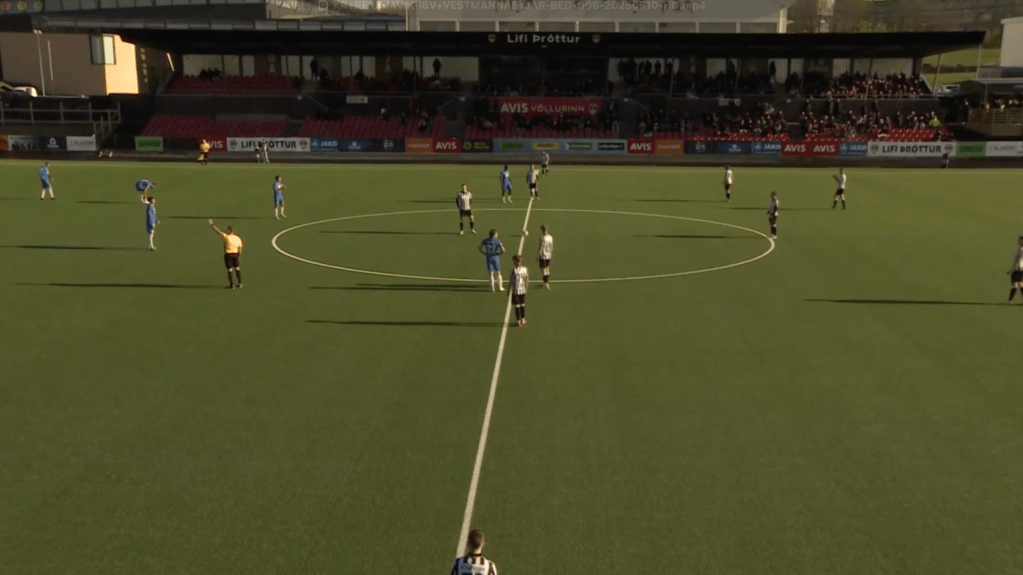
KR began in a 4-1-3-2 defensively, looking to press high and force ÍBV into wide areas. Their holding midfielder anchored the shape, but would often step higher into midfield, morphing their block into a temporary 4-3-3. This tactical flexibility disrupted ÍBV’s build-up and created pressing traps in central zones. Notably, KR’s full-backs stayed very narrow off the ball, reinforcing central compactness a trait ÍBV would later exploit with long diagonals into the space behind.
📸 Image Below: KR defending in a compact 4-1-3-2 with full-backs tucked inside, inviting long diagonals
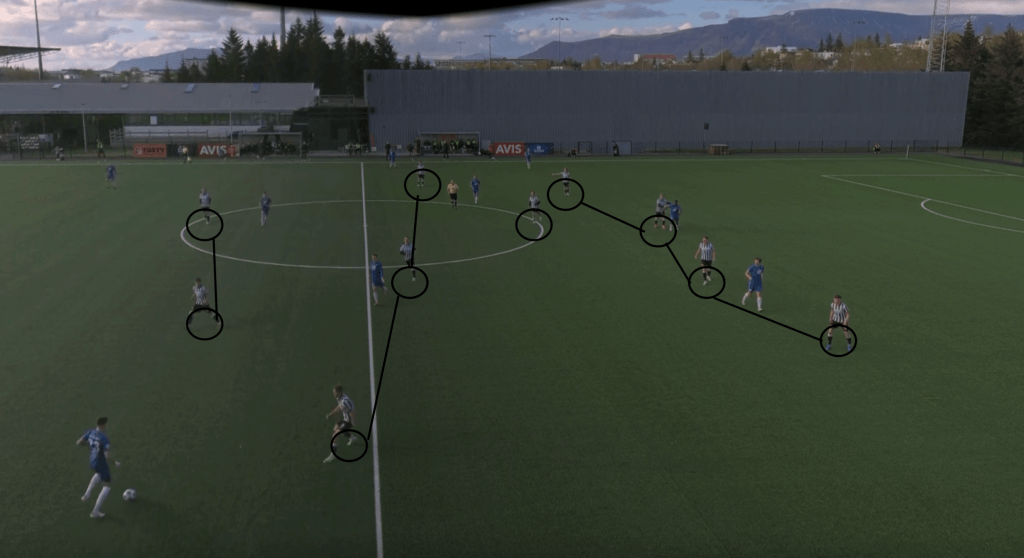
In possession, KR adopted an unorthodox attacking shape that resembled a 2-5-3. Their right back inverted into midfield, joining a double pivot with the 6 (slightly higher), while the left back pushed high like a winger. The left winger then tucked inside to play as an attacking midfielder. This created overloads across five lanes and ensured they could sustain pressure high up the pitch, with numbers ready to attack or win second balls.
📸 Image Below: KR’s in-possession shape inverted RB forms double pivot, LB overlaps, LWF inverts to attack mid
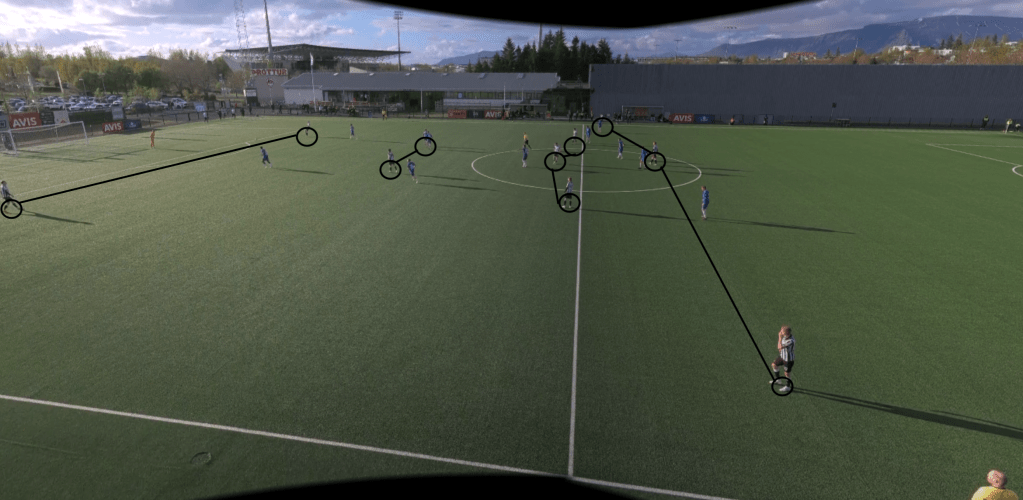
KR’s first goal came from this sustained pressure: after working the ball into the final third, a cross from the right back to the back post was cleared only as far as the edge of the box. A KR player was perfectly placed to strike it cleanly into the net. Their second goal followed a similar pattern patient possession in ÍBV’s half led to a driven low cross from wide, with multiple KR players flooding the box. The initial shot was saved, but they were first to the rebound and punished ÍBV again a reflection of how focused KR are on attacking with numbers and pouncing on second balls.
KR also showed variety in set pieces. On corners, they sometimes loaded the back post, using decoy front-post runs before delivering to an unmarked player. In one routine, they played short, involving a third man from the box who received on the turn and crossed to the far post. Despite conceding from a corner themselves while leaving three players high up the pitch KR continued with this setup even while leading 2–1, underlining their aggressive mentality and confidence in transition threats.
🌟 Players Who Stood Out:
Halldór Snær Georgsson (KR Reykjavík, Goalkeeper – Born 2004, Age 21)
Georgsson was pivotal in securing the result for KR with a composed and commanding performance in goal. He made multiple crucial saves, especially in 1v1 situations during counterattacks, showcasing excellent reflexes and positioning. His shot-stopping ability provided the foundation for KR to commit numbers forward without fear of being punished in transition.
Alexander Rafn Pálmason (KR Reykjavík, Midfielder – Born 2010, Age 15)
At just 15 years old, Pálmason not only impressed with his composure and movement but also scored making him the youngest to play, start and score in Iceland’s top tier. Positioned perfectly inside the box during a chaotic second-phase moment, he reacted quickest to a rebound and calmly slotted it home. His awareness, quick decision-making, and ability to impact the game in high-pressure areas stood out in a mature performance well beyond his age.
👉 Like what you read? SUBSCRIBE to the blog to receive all future breakdowns, reports, and tactical insights!
Discover more from Scoutmania
Subscribe to get the latest posts sent to your email.
 Scoutmania